
 Beginner
 Hardware / E-cig
 E-Liquids
 DIY
DIY
 Help ?
 PLUS Member
 Member Plus Selection
 Destock'Vape
- Health: studies on vaping
- 1 likes
- 1414 views
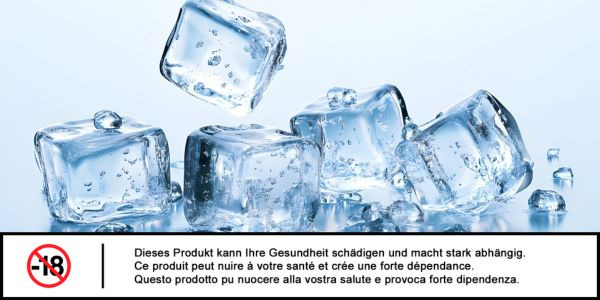

You have probably already experienced that little rush of cold when vaping an “ice” e-liquid, even when there is no mint in the recipe. This is neither a coincidence nor a magic trick: it is the result of using a sensory mechanism well known to science—one that even earned its discoverers a Nobel Prize.
Our bodies have a major cold sensor: the TRPM8 receptor. This ion channel was independently identified in 2002 by the teams of David Julius and Ardem Patapoutian. In 2021, the two researchers jointly received the Nobel Prize in Physiology or Medicine for their discoveries concerning temperature and touch receptors. More broadly, the award recognised their work on the molecular mechanisms of heat, cold and mechanosensation.
What makes this receptor particularly interesting is that it can be activated in two different ways: either by an actual drop in temperature or by certain molecules that directly stimulate the receptor, without anything actually becoming colder. The brain then receives the same signal as if the temperature had genuinely dropped. It is this second pathway that explains the ice sensation in e-liquids.
Menthol is the best-known molecule for this type of “chemical” activation of the sensation of cold. It has long been used for this property in a wide range of applications, from confectionery to oral hygiene.
However, menthol has one characteristic that can limit its use in certain formulations: it always brings its own distinctive menthol flavour, which may conflict with other aromas.
To overcome this limitation, synthetic molecules such as WS-23 were developed. Like menthol, WS-23 activates the TRPM8 receptor. It stimulates the cold-sensitive receptors in the mouth and throat, thereby producing a sensation of freshness comparable to that of menthol.
The major difference is that it does so without the associated menthol flavour. This makes it possible to combine WS-23 freely with a wide variety of flavour profiles—fruity, sweet or tangy—without the flavours competing with one another.
WS-23 is a synthetic cooling agent used to produce a sensation of cold with little noticeable menthol character. Like menthol, it can activate the TRPM8 receptor, which is involved in the perception of cold, without necessarily lowering the actual temperature of the tissues.
However, this sensory property does not make it possible to conclude that WS-23 is harmless when inhaled. Data on the pulmonary effects and long-term impact of synthetic cooling agents in e-liquids remain limited. Health authorities stress that inhalation exposure requires specific assessment and that the regular use of highly concentrated products may present a risk.
WS-23 and WS-3 are classified as additives. This category generally includes any substance added to a product to provide a specific property—in this case, a sensation of freshness—without being part of its basic composition.
They therefore have the same status as many other ingredients commonly found in food products or oral hygiene products for the same purpose.
Cooling agents of this type are not exclusive to vaping products. They have long been used in everyday products such as toothpastes and oral hygiene products, where they serve exactly the same purpose: providing a clear and recognisable sensation of freshness without necessarily relying on traditional menthol.
Their use in e-liquids is therefore part of a broader practice that is already well established in other industries for the same sensory effect.
Beyond the purely technical aspect, the appeal of WS-23 in e-liquid formulation also lies in its versatility. Because it does not have a pronounced menthol flavour, it can be added to a wide range of flavours to provide a refreshing note without competing with the recipe’s main flavour.
This flexibility explains the wide variety of “ice” e-liquids available on the market today—from frozen fruit flavours and refreshing desserts to reimagined classic menthol blends.
The functioning of the TRPM8 receptor and the use of cooling agents such as WS-23 are the subject of published scientific research. This includes academic studies examining how users perceive and appreciate refreshing flavour profiles compared with traditional menthol formulations.
This reflects a field in which scientific understanding continues to develop, well beyond vaping alone. TRPM8 is also of interest in research into sensory perception more generally, including physiology and food science.
The ice effect is therefore not a mysterious trick. It results from the intelligent use of a sensory mechanism that naturally exists in our bodies: the TRPM8 receptor.
The same receptor that allows us to feel the cold of a winter evening can be activated by specific molecules such as menthol or, more recently, WS-23. The advantage of WS-23 is that it delivers intense and versatile freshness without imposing its own strong flavour, opening the door to a wide range of iced flavour profiles.
The next time you feel that refreshing sensation while vaping, you will know that your own nervous system is playing the leading role, through a mechanism that is now well documented by science.
Thank you for reading.
The Sweetch Team


Become a member PLUS and enjoy a multitude of benefits for just CHF 80 per year. By joining our programme, become a privileged member and gain access to exceptional offers throughout the year.
You can use your points and benefits for 1 year after buying your membership.
You can save your benefits and accumulated points from year to year by renewing your member PLUS subscription.
Don't miss out on all our exclusive benefits by becoming a member PLUS. Join now and save all year long on your online and in-store purchases.